
How do I use and manage Groups?
Plan requirement: Groups are part of the branded LMS, available on Pro + LMS and Enterprise. Compare plans.
On an earlier plan? Plan names and inclusions changed when we moved to Free, Creator, Pro, Pro + LMS and Enterprise. If you are on an earlier plan, your subscription continues unchanged and you keep everything it included — so you may still see features this article lists under a higher plan. Nothing has been removed from your account.
Groups are independent of individual courses and can be used to host webinars, share resources, or build a learning community. You can link groups to courses, invite members, add notes, share events, and publish updates.
Create a Group
To create a Group, your user account must have Admin status enabled and your user Status set to "Approved Admin".
If Admin status is not enabled at the account level:
The "Create a group" button will not appear in the drop-down navigation
The Groups submenu option may not be visible
Which user types can create a Group is controlled by a Super Admin under Settings → Permissions → New Group. If the Create button is missing, check that your user type is ticked there.
Create a Group in Coursebox (Step by Step)
Select Groups from the left hand menu, then click the Create button in the top right.
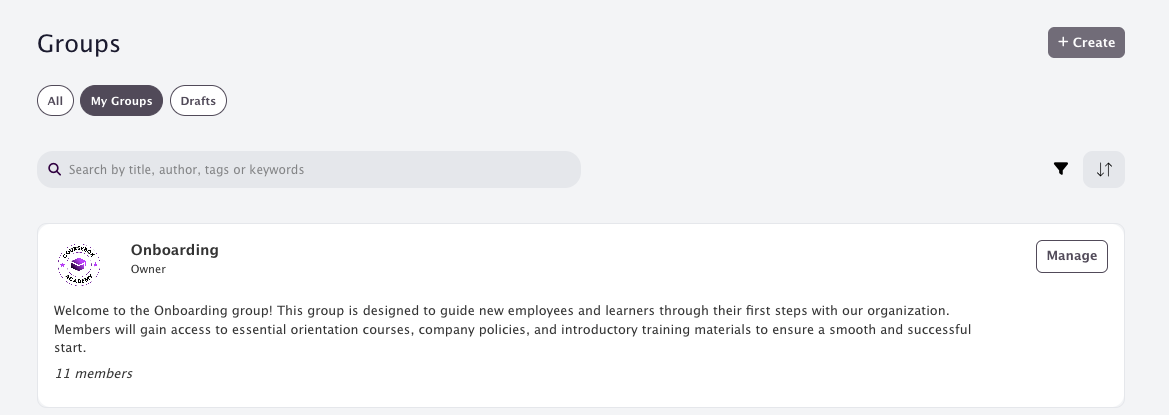
On the Group setup screen:
Enter the Title of your Group
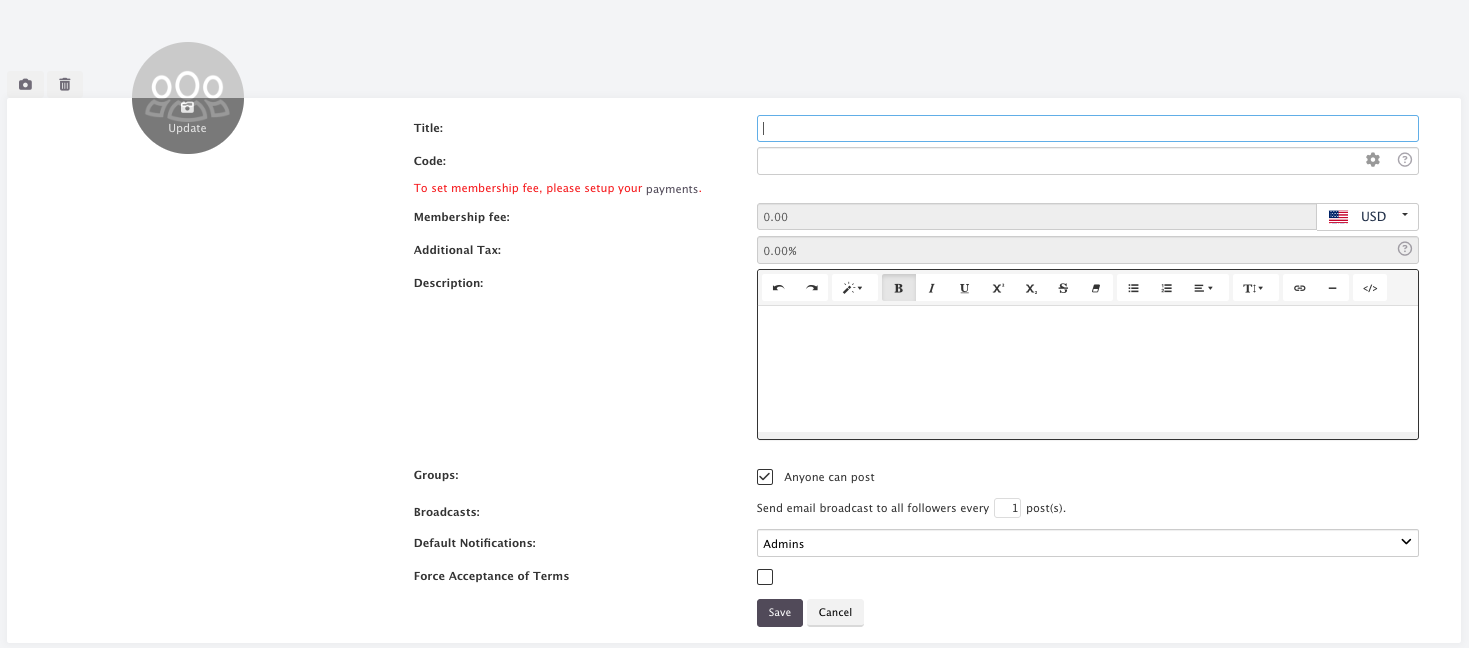
(Optional) Add a Code for internal reference
Leave Membership fee at
0.00if the Group is free
If you want to create a paid Group:
Enter a Membership fee (monthly amount)
Select the currency (e.g. USD, AUD, EUR)
Add Additional Tax if required (e.g. GST/VAT)
Important: You must connect Stripe before charging members.
In the Description field:
Explain the purpose of the Group
Describe who it's for and what members will receive
Use the rich text editor to format text or add links
Example:
The Aspiring Author Group is a supportive and inspiring community for writers at every stage of their journey.
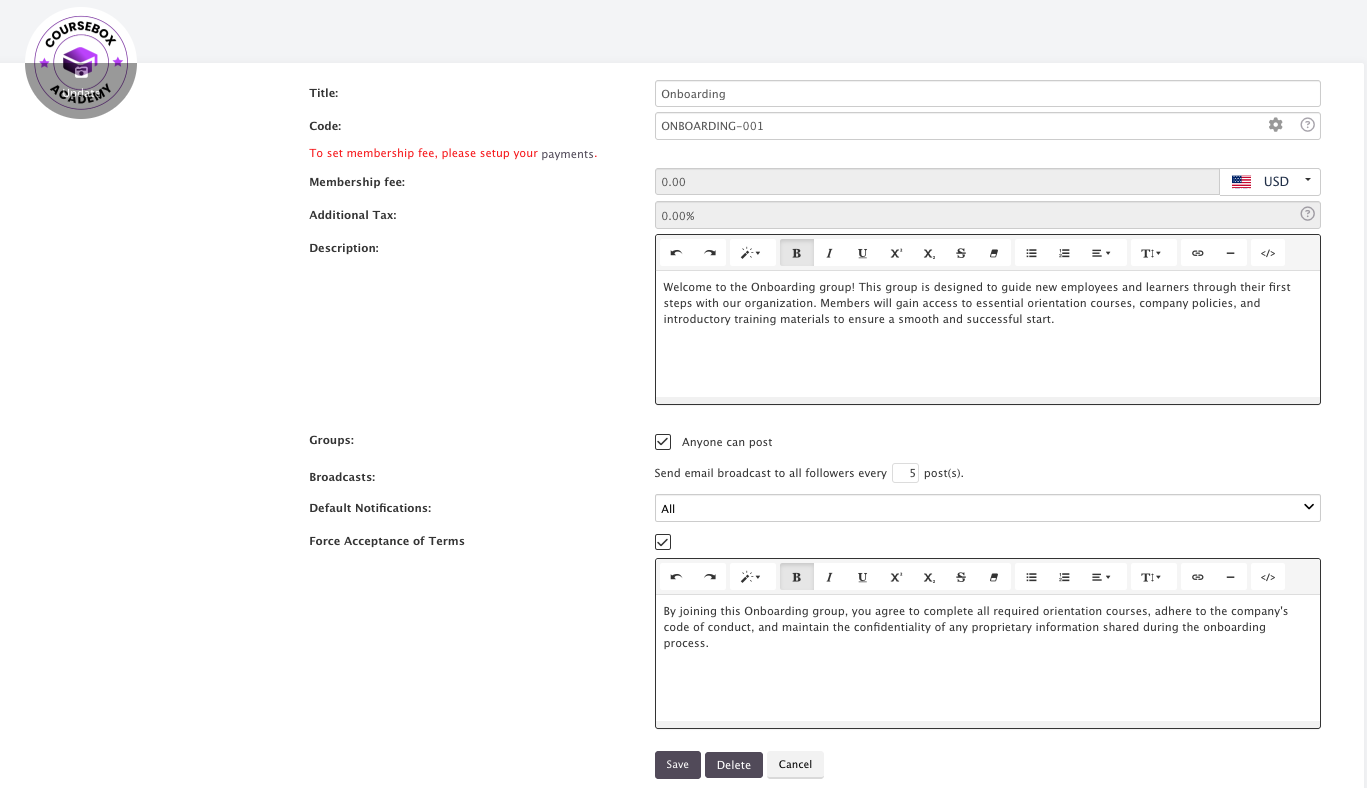
Click Save to create the Group.
Your Group is now created but not yet published.
Publish a group
You can publish a group in three ways, depending on how you want to manage visibility, access and monetisation:
Public Group — open to everyone and easy to discover
Private Group — accessible only by invite or admin approval
Paid Membership Group — requires a monthly subscription for access
The group page header
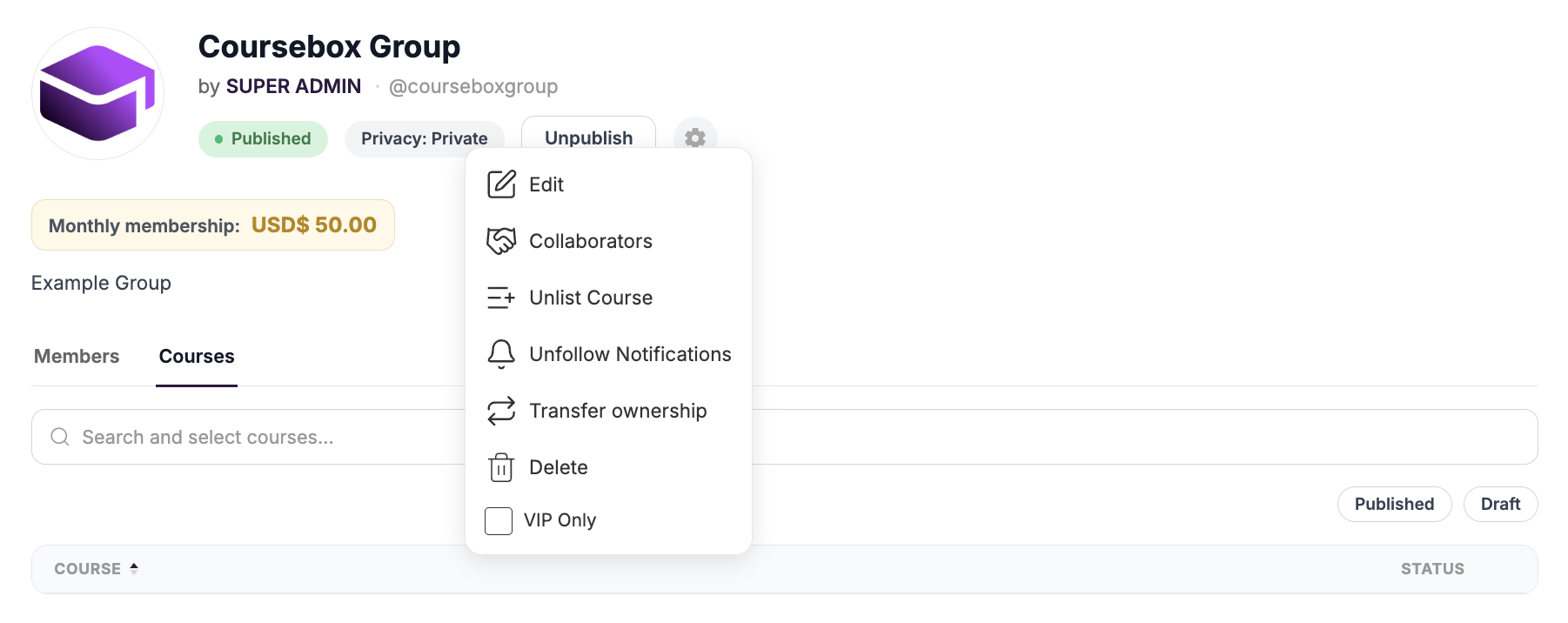
When you open a Group, the header at the top of the page shows its current state at a glance:
Status pill — for example Published.
Privacy — for example Privacy: Private or Privacy: Public.
Unpublish — takes the Group offline again. (On an unpublished Group this button reads Publish.)
Gear icon (⚙️) — opens the Group settings menu, including Edit.
Monthly membership badge — if a membership fee is set, the amount is shown directly under the title (for example Monthly membership: USD$ 50.00).
Publish a Private Group
Only people added to the group will be able to see it.
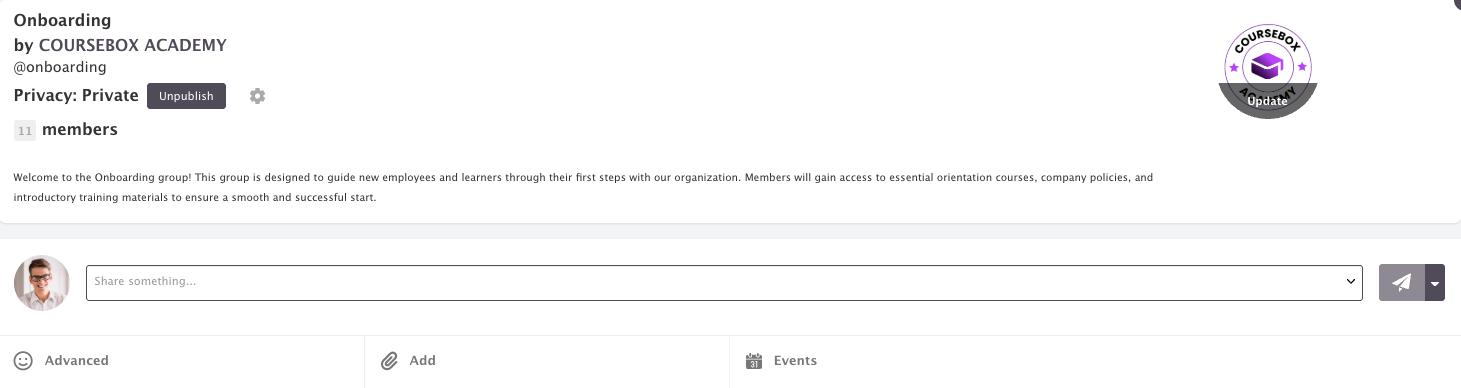
Go to your Group and select Publish from the arrow down.
From the drop-down choose Private.
The header will then show Published and Privacy: Private.
Publish a Public Group
Anyone can find and join the group without approval.
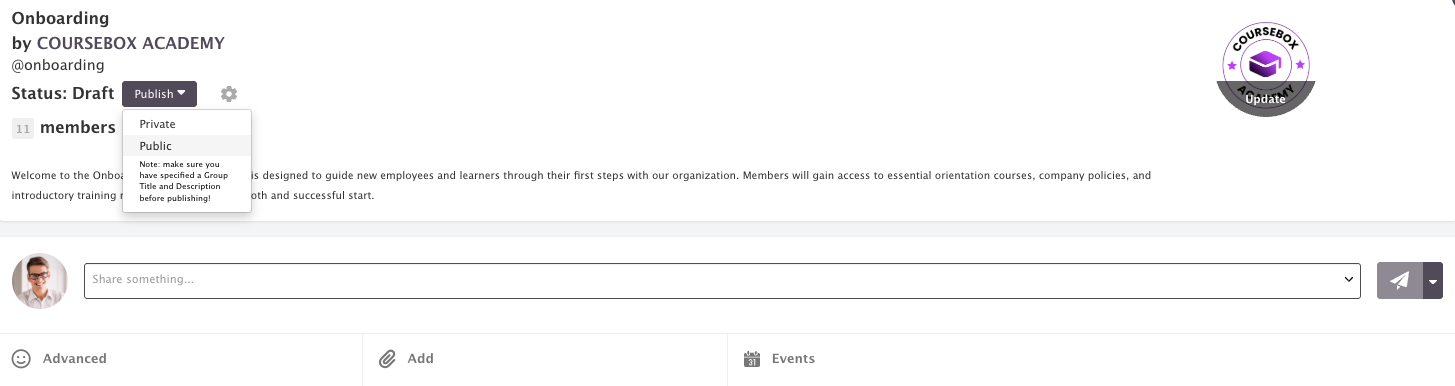
Go to your Group and select Publish from the arrow down.
From the drop-down choose Public.
The header will then show Published and Privacy: Public.
Publish a Group with Paid Membership
You can charge users for access to your bundle (or group) content on a recurring monthly basis by following these steps:
Navigate to the Groups tab and select the bundle you want to monetise and click manage.

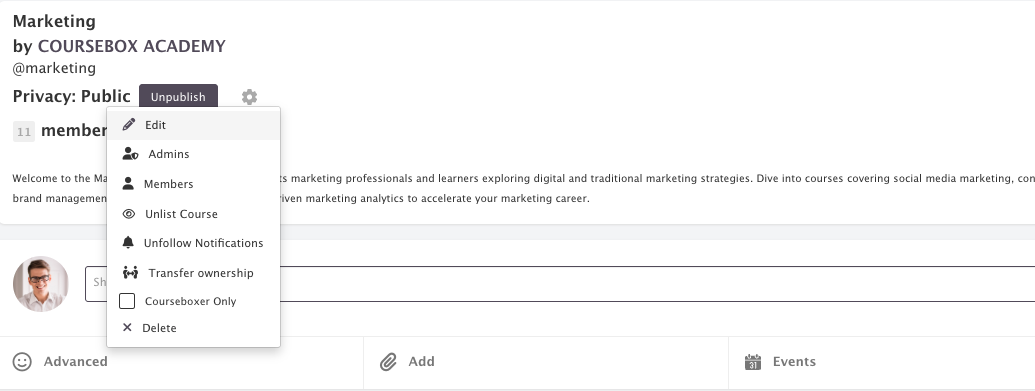
Click the gear icon (⚙️) next to the title.
Select Edit from the dropdown menu.
Important: Before setting a membership fee, you must first connect your Stripe account.
In the Membership Fee field, enter your monthly price (e.g.
29.00).
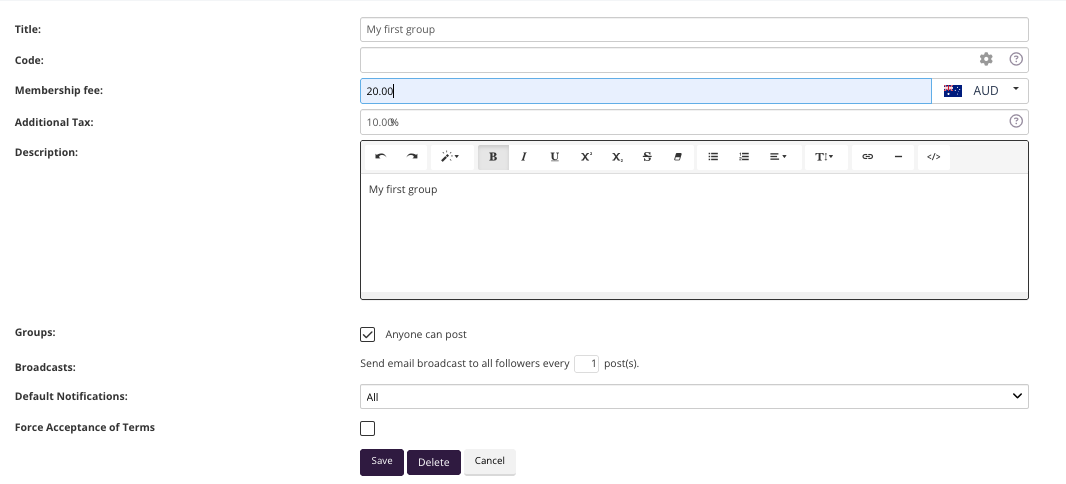
Select your currency from the dropdown (e.g. USD or AUD).
In the Additional Tax field, add any VAT/GST percentage (e.g.
10.00for 10% GST).
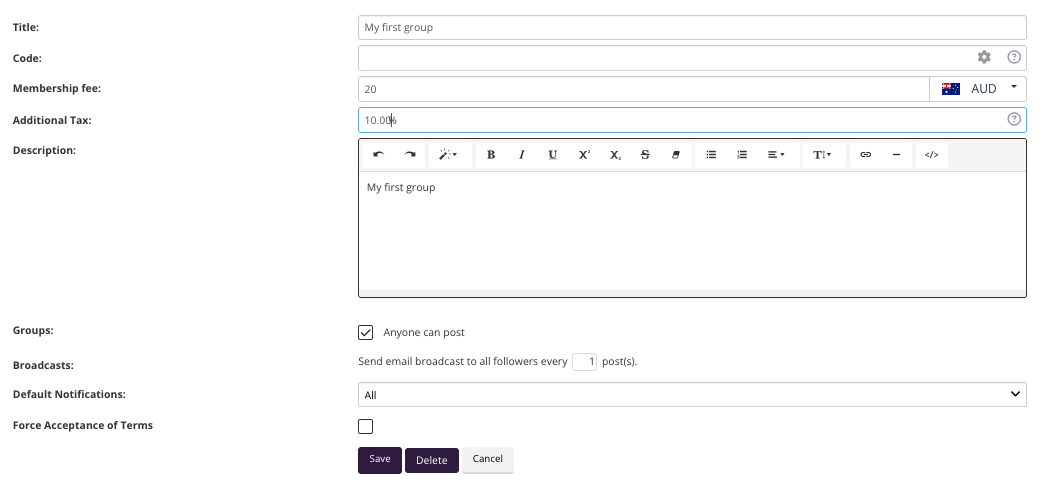
Use the Description box to explain what members get for their subscription. You can format the text using the toolbar above the box.
Example:
Access to all premium training content, monthly webinars, downloadable templates, and discussion boards.
Groups: Tick "Anyone can post" if you want members to contribute to discussions.
Broadcasts: Set how often email broadcasts are sent. For example, if set to 1, members will receive an email for every post.
Default Notifications: Choose if All users or only Admins will receive updates by default.
Force Acceptance of Terms: Tick this box if you want members to agree to your terms before joining.
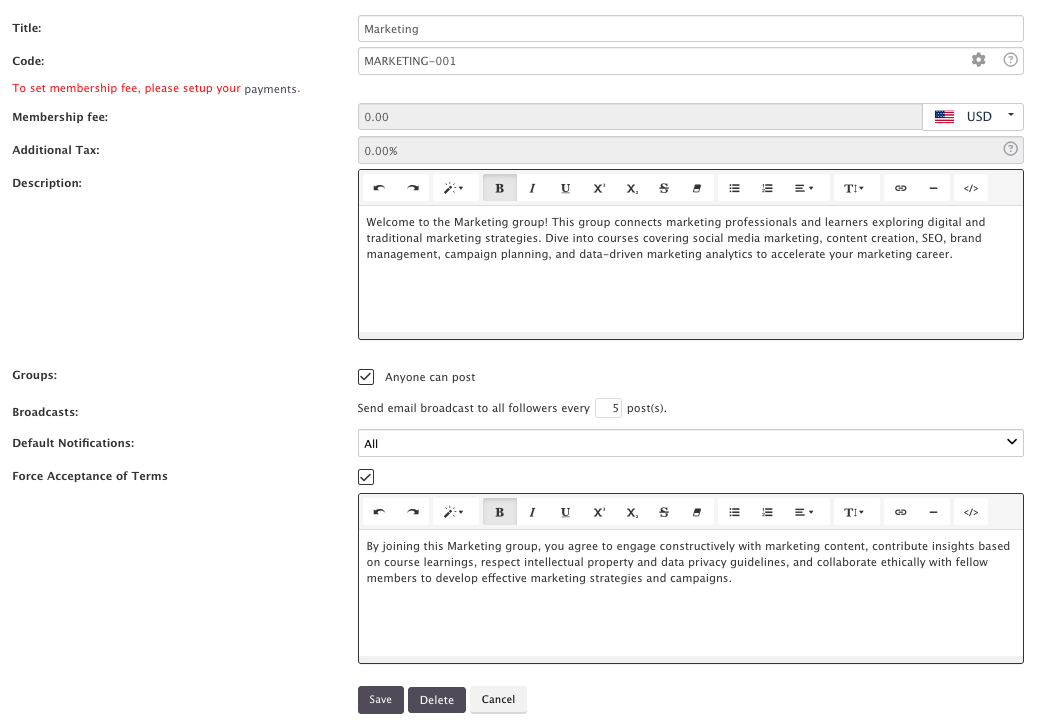
Click Save to apply your changes.
You can now Publish the bundle and share it with your audience for paid monthly access.
Once saved, the monthly price appears as a Monthly membership badge under the Group title.
Request Access vs Subscribe
If a group is published in Private mode and is not connected to a paid course or recurring membership product, users will see a "Request Access" button.
To display a "Subscribe" or payment option instead, the group must be attached to:
A recurring membership product, or
A paid course/subscription product
If no payment product is linked, the system will default to "Request Access."
Mobile App Note: The mobile app mirrors the LMS configuration. If the group is not connected to a subscription product, users will not be redirected to a paywall.
Invite Members to Groups
Once a Group is created, you can view and manage it directly from the Groups panel:
Filter Groups: Use the search bar to quickly locate a Group by name.
View Members: Each Group lists the number of members. Click the Group name to open the Group and view its full member list.
Manage Actions: Under the Action column, you'll see options such as editing the Group details, adding or removing members, or deleting the Group.
The Members tab
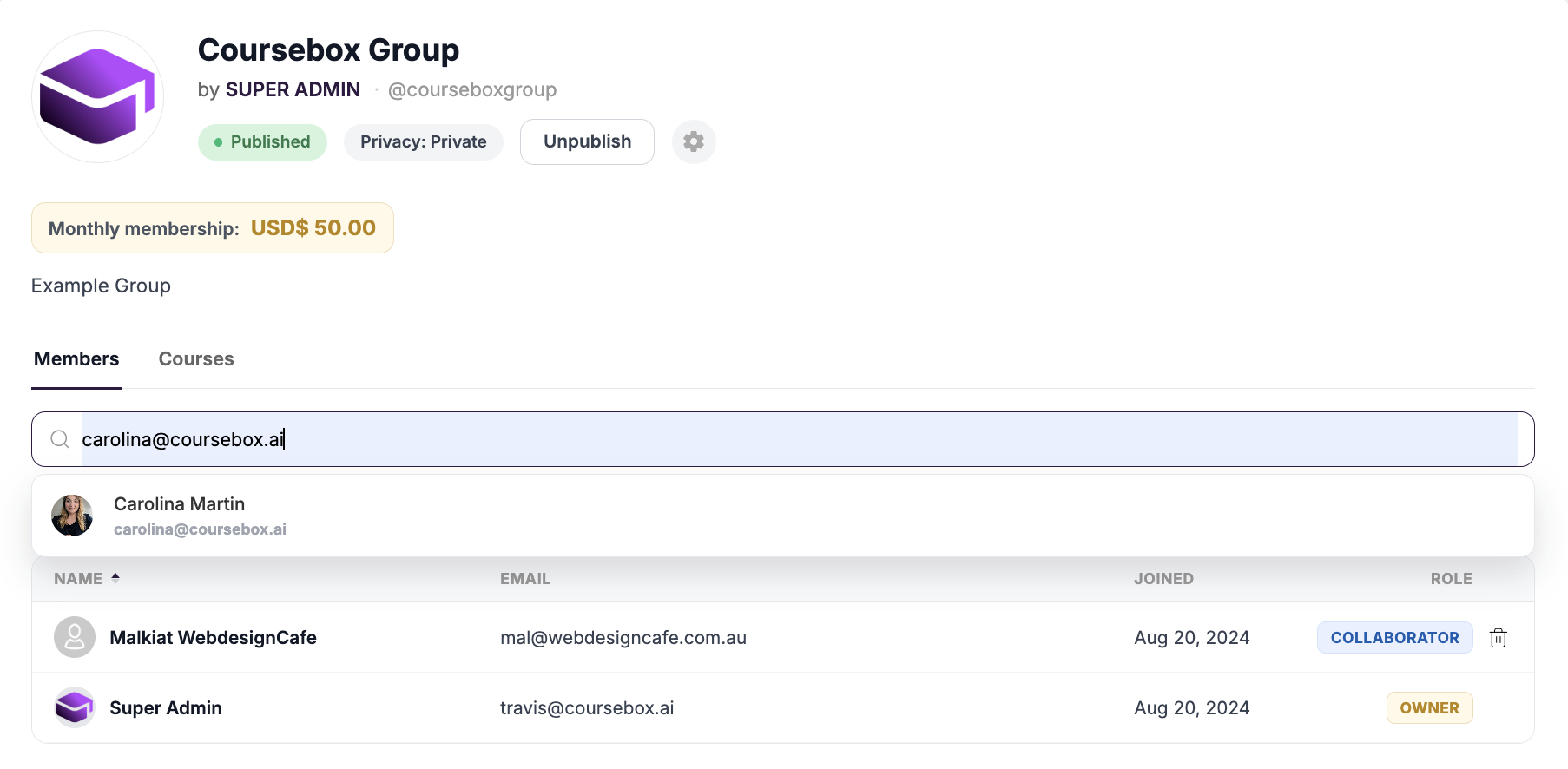
Open the Group and you'll see two tabs under the Group description: Members and Courses. The Members tab is where you find, review and remove the people in your Group.
On the Members tab you can:
Search by name or email — use the search bar to find a specific person.
Filter by role — use the Members, Collaborators and Owner buttons on the right to show only that role.
Review the member list — the table shows Name, Email, Joined date and Role. Roles appear as coloured badges, such as COLLABORATOR and OWNER.
Remove a member — click the trash icon at the end of that person's row. The Group Owner has no trash icon and cannot be removed this way.
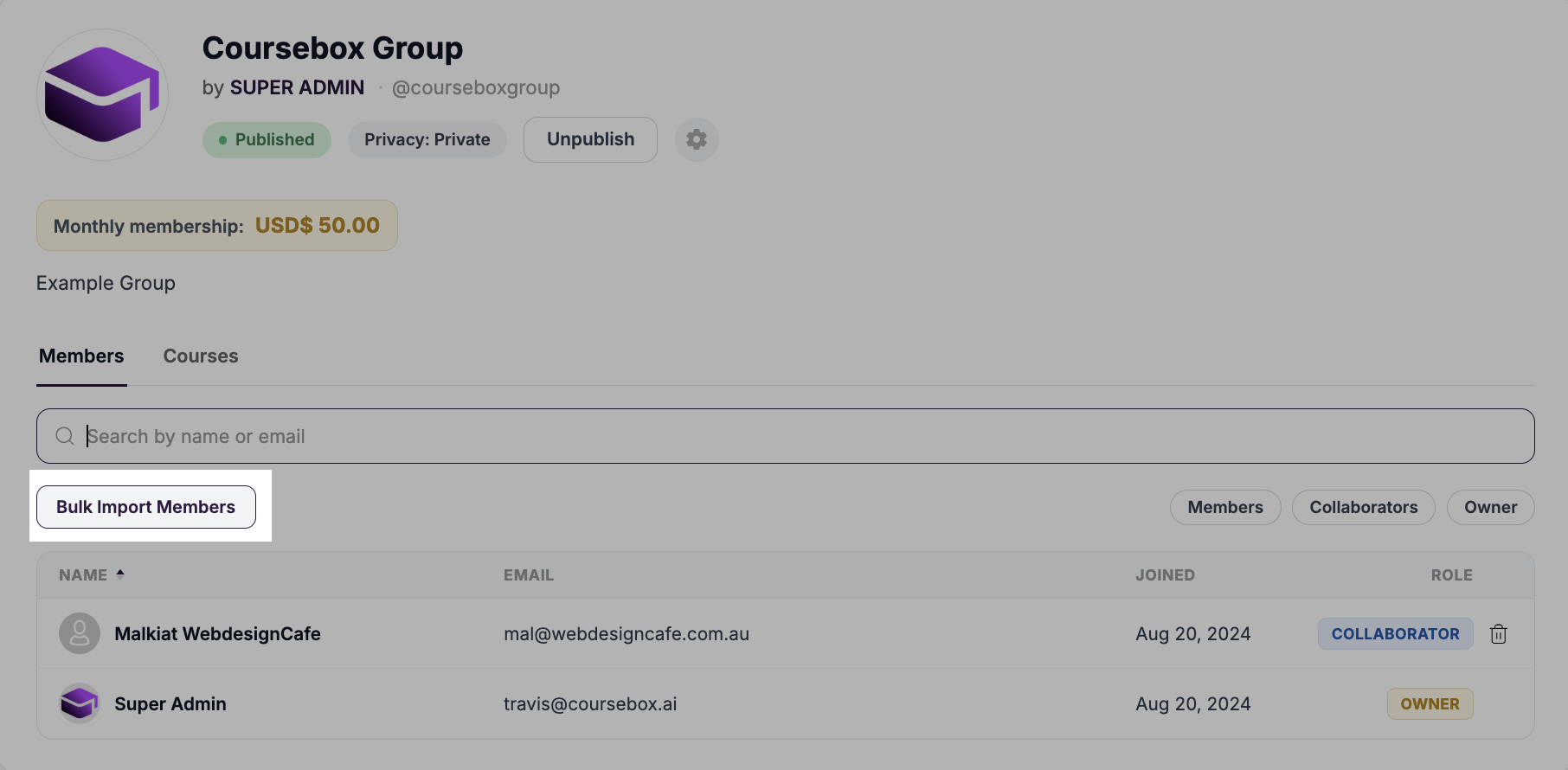
Bulk Import Members — use the button on the left to upload a CSV (see below).
To add an individual member, use the gear icon (⚙️) next to the Group status and choose Members, then enter the person's name and click Add. The member must already be registered with your training portal.
Bulk Import Members to a Group
Navigate to Groups in the left-hand menu. Click on the Group name (for example, Aspiring Authors).
Select the Members tab.
Click Bulk Import Members, just below the search bar.
The Bulk Import Members modal window will appear. You'll see a drag-and-drop upload area and a Download sample CSV file link.
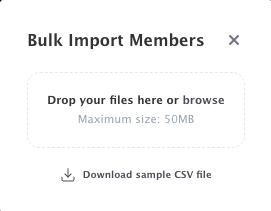
Use the sample CSV as your template so your columns match what Coursebox expects. Imported people must already be registered on your portal.
Enrol by group
You can enrol learners into a course by group directly from the course's enrolments panel.
From the course overview page, click the Enrolments icon (the people icon) in the top toolbar.
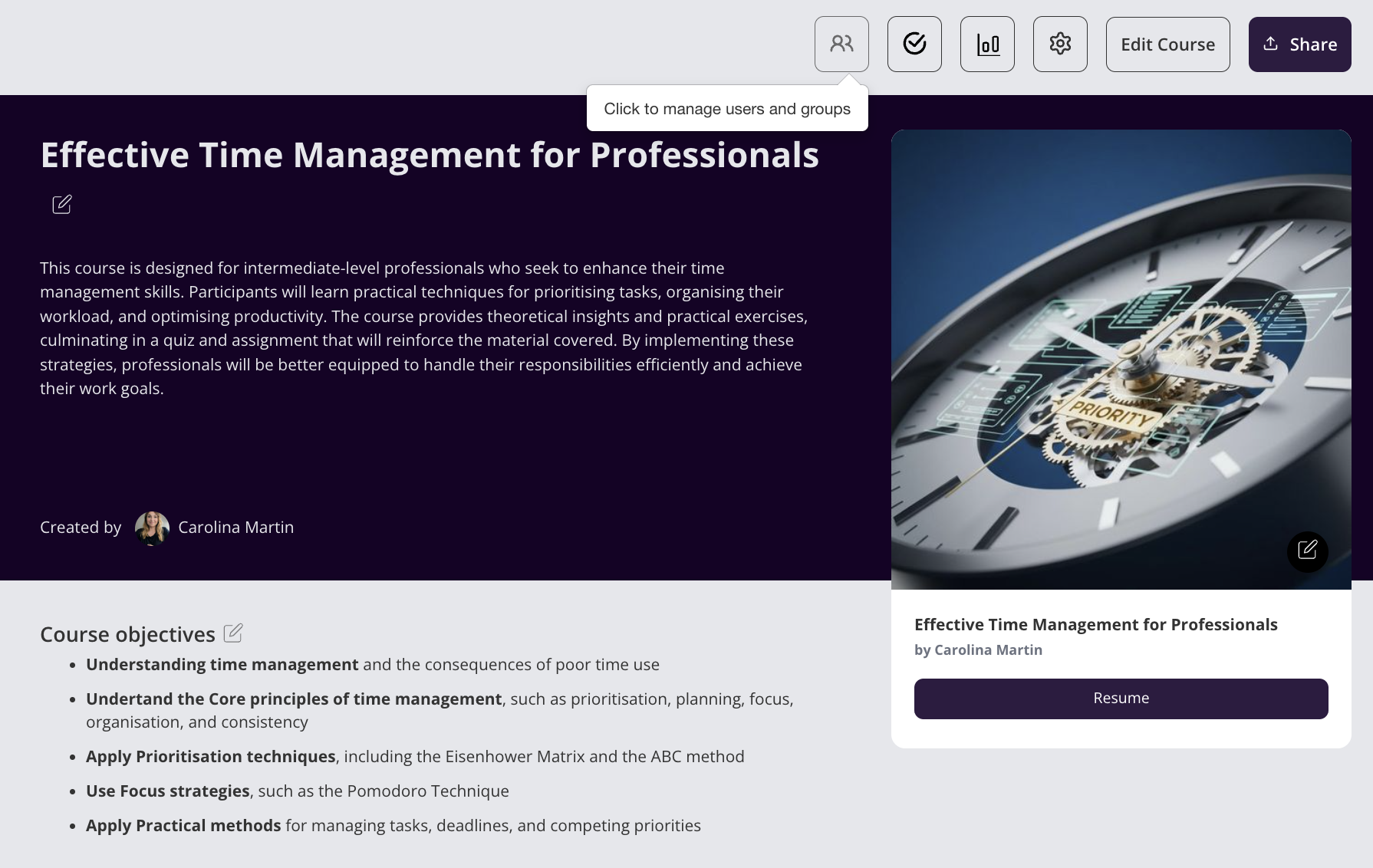
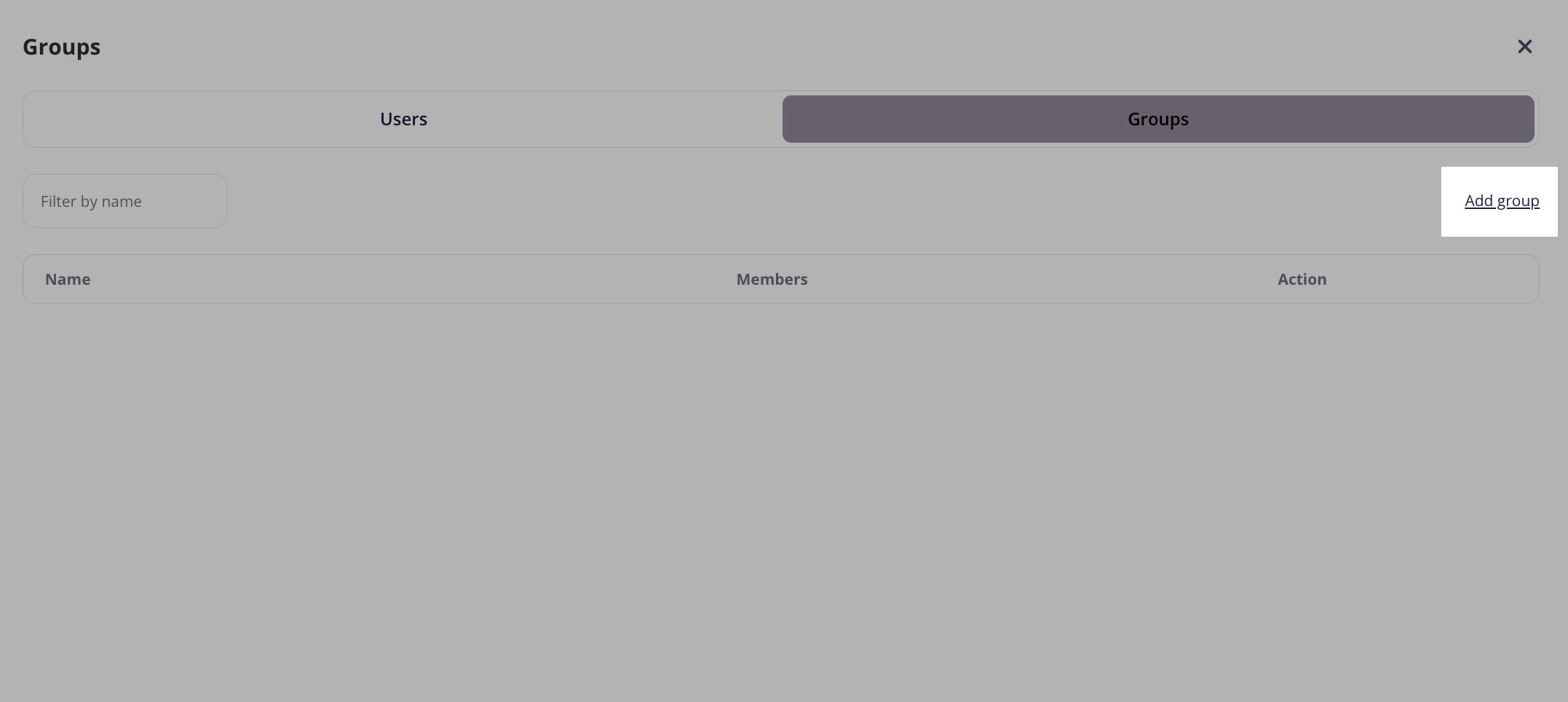
In the panel that opens, click the Groups tab.
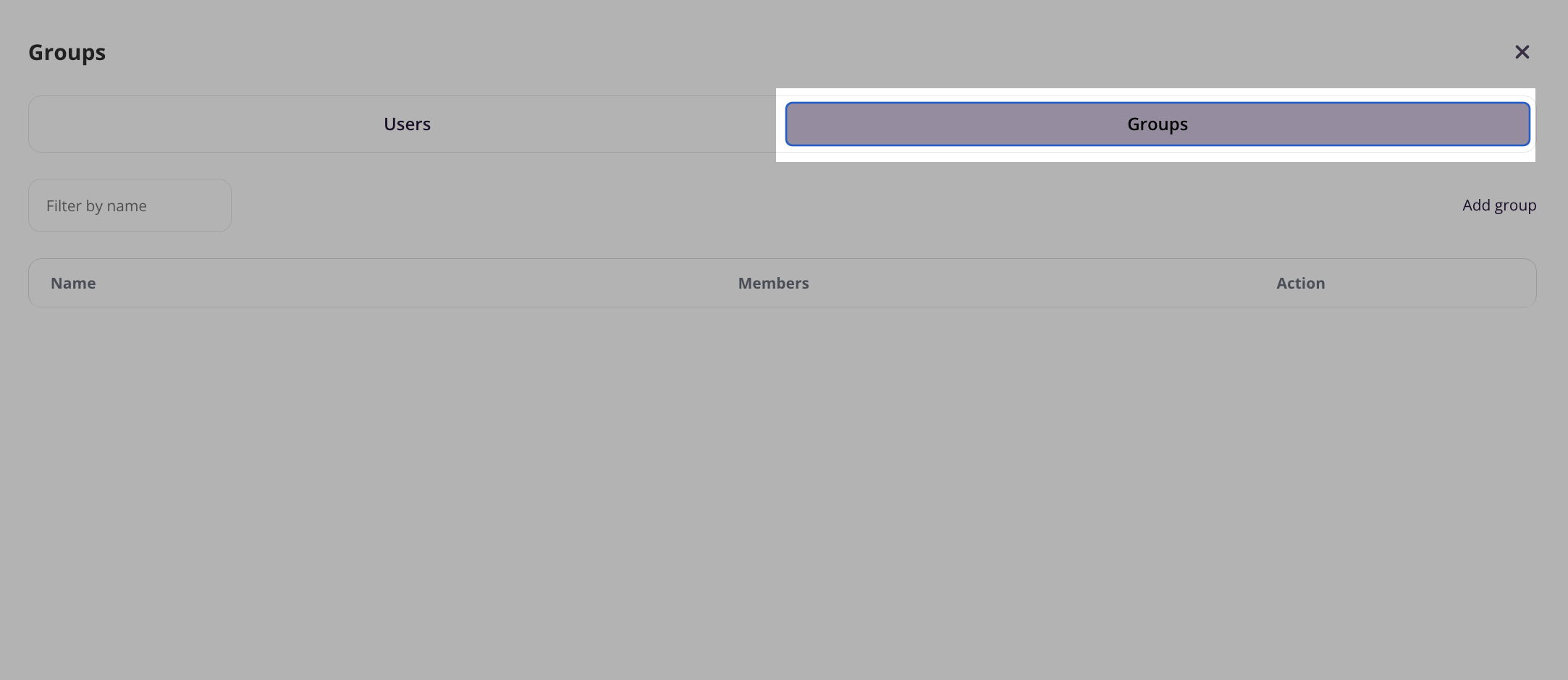
Use the Filter by name search bar to find an existing group.
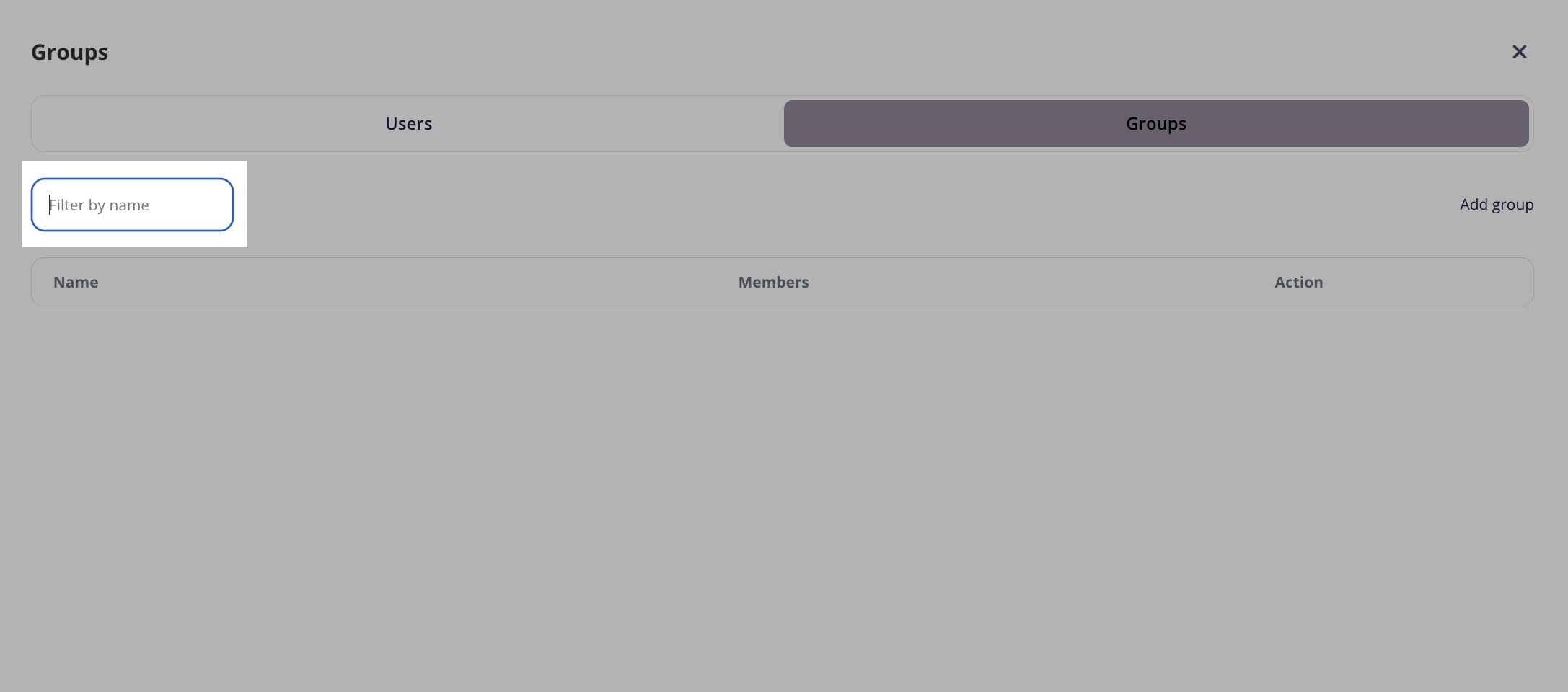
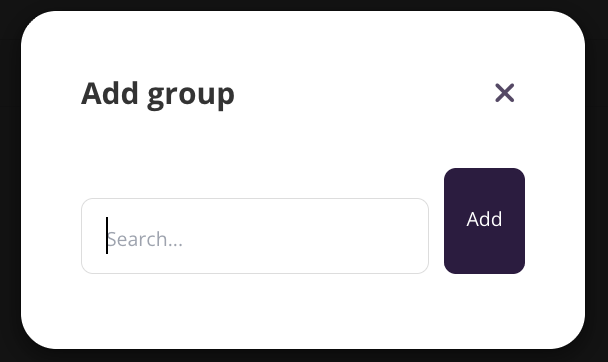
Click Add group to enrol a new group.
In the Add group modal, search for the group name and click Add to confirm.
For the full reference on groups, see Group Management. To learn about selling recurring monthly memberships via groups, see How can I sell monthly recurring memberships in Coursebox?
The Courses tab
The Courses tab on the Group page shows the courses attached to this Group, so you can see at a glance what your members have access to.
Using Groups as a community or sub-community
Groups are how you build a community in Coursebox. You can run one main community for all learners and a separate sub-community (discussion space) for each course, using Discussions inside the group for conversations, questions, and updates.